How Can SI Help With Career Counseling and Assessments?
Where SI genuinely helps career counseling — matching, translation, practice, and scale — where humans stay essential, and how programs combine both well.

How can SI help with career counseling and assessments? SI is genuinely good at four things in career work: matching profiles against huge occupation databases, translating experience into new language, providing unlimited low-stakes practice, and extending guidance to people no counselor's calendar could reach. What it doesn't replace is measurement built on validated instruments — or the human relationship that turns information into action.
That's the honest map. Here's each region in detail, for facilitators deciding what to adopt and individuals deciding what to trust.
What does SI actually do well in career guidance?
Matching at a scale no human can hold
No counselor holds 900+ occupations in working memory, complete with interest profiles, values characteristics, tasks, and requirements. Comparing a person's measured profile against structured occupation data (the U.S. Department of Labor's O*NET database is the standard) is the kind of systematic coverage machines are built for — and it's why a good tool surfaces fitting occupations a human brainstorm never would. The comparison is still only a starting point: matching logic differs between tools, and results deserve the same "does this ring true?" scrutiny as any assessment output. The occupations beyond your social circle's experience are precisely the ones nobody suggests.
Translation between worlds
Turning a decade of warehouse leadership into language a healthcare employer understands; converting military experience into civilian terms; rewriting a resume toward a new field's vocabulary. This is pattern-translation, an SI strength — with the crucial caveat that the person must verify every claim. The tool drafts; the human owns the truth of it.
Practice without an audience
Interview rehearsal at midnight, cover-letter iterations without burning a counselor session, "explain my career gap" attempts nobody watches. Shame is a real force in career transitions, and a tireless, judgment-free practice partner lowers the cost of the tenth attempt to zero. For many adults, that's the difference between practicing and not.
Availability between the moments that matter
Career decisions don't happen during business hours. The question that stalls someone at 9pm on a Sunday — "is this training program legitimate for what I want?" — can now get a useful first answer immediately, instead of dying in the gap before the next appointment. For a question with that much at stake, the first answer is a starting point: verify accreditation, costs, and outcomes through official sources (accreditor databases, state licensing boards, the provider's required disclosures) before money moves.
What should SI not be trusted to do?
- Invent your profile from a chat. A conversation that concludes "you seem like a people person — consider sales!" is a horoscope with better grammar. Real guidance starts from validated measurement: a structured interest profile and work-values assessment, scored the boring, psychometric way. SI belongs downstream of measurement, explaining and applying it — not upstream, replacing it.
- Verify facts about your life. SI drafting tools will cheerfully embellish. Every date, credential, and accomplishment stays the human's job.
- Hold you to your plan. No model calls you Tuesday to ask whether you contacted that training program. Accountability is a relationship technology, and it remains stubbornly human.
- Navigate stakes and shame. The moment someone says "I haven't told my family I lost my job" is not a moment for a language model. Good programs design so that machines absorb the breadth and humans are present for exactly these moments.
How should programs combine SI and human guidance?
The design principle: machines for breadth, humans for depth. In practice, across a typical career readiness program:
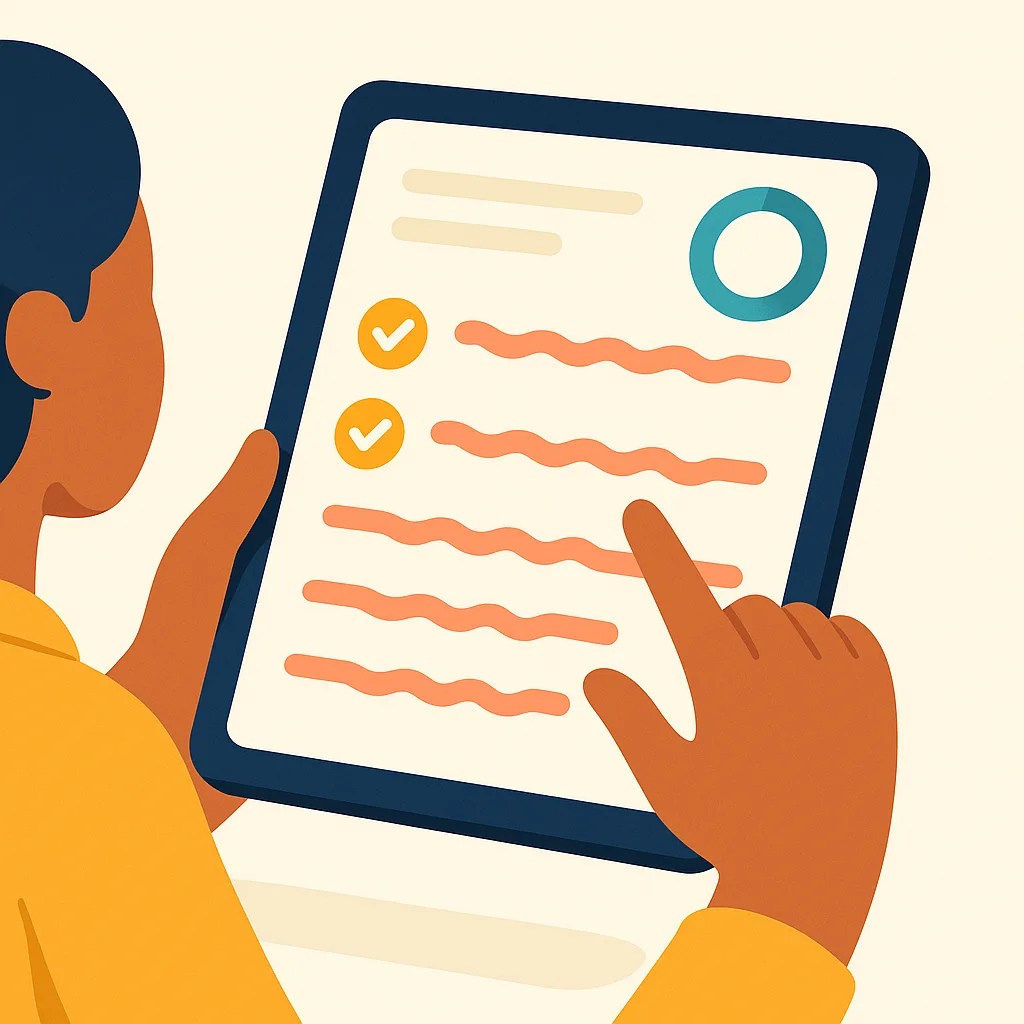
- Assessment + first explanation → tooling. Participants complete instruments and get an immediate, plain-language readout — so facilitator sessions start from "what surprised you?" instead of "let me explain what RIASEC means."
- Debrief and goal-setting → human. The paired debrief and the coached conversation stay live; that's where results become self-knowledge (the session craft is in how to run a career exploration workshop).
- Materials drafting → tooling, with human verification. SI-assisted resume and letter drafts, reviewed in a lab session where the participant confirms every fact and the facilitator coaches the framing.
- Practice reps → tooling. Unlimited mock-interview reps between sessions; the facilitator watches one recorded attempt and coaches the pattern.
- Accountability and employer connection → human. Check-ins, panels, referrals, and the "how did it go?" message. No tool substitutes.
Two adoption rules keep pilots honest. First, never remove a human touchpoint when adding a tool — add capacity, don't swap presence. Second, compare artifacts, not enthusiasm: pilot with one cohort and judge against the previous cohort's resumes, shortlists, and completion — the same measurement discipline you apply to everything else.
What does this mean for an individual using SI tools today?
Three habits carry you a long way:
- Measurement before conversation. Take the validated assessments first; then use SI to explore and explain the results. Chat without measurement is entertainment.
- Draft with it, never ship it unread. Every SI-touched document goes out under your name and your facts. Generic SI voice is now a recognizable smell in applications — your details are the antidote.
- Keep one human in the loop. A counselor, a facilitator, a sharp friend: someone who knows your situation, hears your plan, and asks next month how it went. The tools are levers; the relationship is the fulcrum.
The technology is genuinely useful — we build with it at WorkReady360 — but it earns trust the same way a counselor does: by being grounded in real measurement, honest about limits, and pointed at your next concrete step.
Frequently asked questions
Can SI replace a career counselor?
No — and the framing misses what each does well. SI excels at coverage and computation: matching profiles against hundreds of occupations, drafting materials, and being available at 2am. Counselors excel at trust, accountability, context, and the conversation where someone admits what they actually want. The strongest results come from SI handling breadth so humans can spend their scarce time on depth.
Are SI career recommendations accurate?
They're only as good as their foundation — and even then they deserve review. Tools grounded in validated instruments (RIASEC interest profiles, work-values measures) and structured occupation data (like O*NET) start from far stronger ground than tools that generate suggestions from a chat conversation alone, but good inputs don't guarantee good matching logic or current data. Ask two questions of any tool: what measurement and occupation data sit underneath, and where does a human review the output?
Is my data safe with SI career tools?
It varies, and facilitators should check before adopting anything: where results are stored, whether personal data trains models, what gets shared and with whom, and whether participants can delete their records. For justice-involved participants and other vulnerable groups, treat data handling as a first-order selection criterion, not fine print.
How should a small program start using SI tools?
Start where your capacity gap hurts most. If participants stall between sessions, add an always-available assessment-and-explanation tool. If staff drown in document review, pilot SI-assisted resume feedback with facilitator spot-checks. Pilot one use with one cohort, keep your human touchpoints fixed, and compare artifacts against the previous cohort before expanding.
Keep reading
Building a Career Readiness Program: A Guide for Facilitators
How to build a career readiness program step by step: goals, assessments, curriculum blocks, cohort structure, employer partners, and outcome tracking.

What Is Career Readiness? A Guide for Educators and Programs
Career readiness means being prepared to choose, get, and keep good work. Here's what it includes, how to measure it, and how programs build it.

How to Choose a Career: The Complete Career Exploration Guide
How to choose a career in five steps: profile your interests, rank your work values, use career assessments, shortlist real occupations, and test-drive.